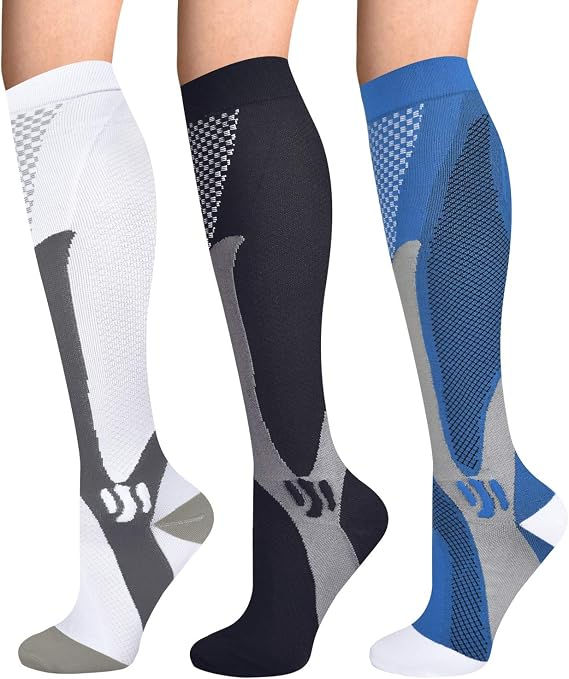

Compression Socks
Compression socks are often recommended after surgery to prevent blood clots developing in the leg.
These graduated compression socks apply firm, measured pressure at the ankle that gradually eases up the leg, supporting healthy circulation and helping to reduce the swelling and heaviness that often follow surgery or long periods of sitting or standing.
Compression socks can also be used to help relieve the side effects of peripheral neuropathy.
10-25mmHg.
Available in 2 sizes (L/XL and XL) and 3 colours (Blue, Black, White). A random colour will be sent.
Size L/XL for men's UK shoe size 7.5 - 13.5 and calf size 35.5cm - 48cm.
Size XXL for men's UK shoe size 11 - 17 and calf size 45cm - 61cm.
80% Nylon, 20% Spandex.
Wearing compression socks during or after chemotherapy can help lower the chances of developing Chemotherapy Induced Peripheral Neuropathy (CIPN) and ease day to day lower limn discomfort.
A 2024 study examining compression therapy for chemotherapy induced peripheral neuropathy found that participants wearing compression socks during and immediately after treatment experienced significantly reduced symptoms compared to those who didn't use compression:
- Reduced Drug Exposure: Wearing tight compression socks during infusion gently restricts local blood flow to the feet, meaning fewer circulating chemotherapy drugs reach the sensitive nerve endings
- Improved Circulation: Compression socks can help to improve circulation which helps deliver more oxygen to damaged nerves, potentially supporting nerve health and reducing pain signals. Better blood flow means your nerves receive the nutrients they need to function properly and may slow further nerve damage
- Reduced Pain and Discomfort: The consistent pressure can provide a comforting sensation that may help override pain signals, reducing the perception of discomfort. This counter-stimulation effect can make painful neuropathy symptoms more manageable throughout the day
- Decreased Swelling and Inflammation: Reduced swelling in the feet and ankles can alleviate pressure on nerves, decreasing pain and numbness. Less fluid accumulation means less compression on sensitive nerve endings
- Better Balance and Stability: The snug fit provides external sensory feedback (proprioception), helping the brain sense foot position and stability when internal nerve signals are weak. Light, even pressure can make feet feel less 'disconnected' or numb, which some wearers find reassuring
- May reduce restless, burning or 'electric' sensations for some people
Please Note: Compression socks do not cure existing nerve damage, but rather assist with symptom management and prevention. Improperly fitted or overly tight socks can restrict circulation too much or irritate sensitive skin, so patients should always consult their oncology care team before starting compression therapy.
Compression socks can help improve post-surgery recovery by enhancing blood circulation, reducing swelling and preventing blood clots:
- Reduces the risk of deep vein thrombosis (DVT) - graduated compression is standard NHS practice after many procedures where immobility slows blood flow in the legs
- Improves venous return - the pressure gradient (firmest at the ankle, easing upward) helps push blood back towards the heart when the calf muscle pump isn't working normally during bed rest
- Reduces post-operative oedema by limiting fluid pooling in the lower legs
- Eases the heaviness, aching and tightness that come with swollen legs
- Can reduce bruising and swelling around the surgical site for lower-limb procedures
- Helps some people feel more confident mobilising early, which is a key part of recovery
Please Note: Compression isn't appropriate for everyone. It's generally avoided in people with peripheral arterial disease, certain heart failure, severe peripheral neuropathy, skin infections, or fragile skin — and the pressure level should be specified by a clinician rather than chosen by the patient. Surgical teams usually prescribe a specific mmHg and wear schedule.
Always check with your medical care team.